








 English
 Español
 Français
 Italiano
 Deutsch
 Dansk
Dansk 日本語
日本語 Nederlands
 Polski
 Svenska









WIN A FULL REFUND
Share your positive experience with Travel to Iceland and get a chance to win a 100% refund.
DRIVE FOR LESS
TIME TO SHIFT INTO SAVING MODE!

Savings per booking
Avg. 7%

Plenty of offers
Year-round

Travel community
Over 100k

Human support
Within 2h
Hunt for the best camper rentals in Iceland at the best price.

Starting from
$93 / day
Before $98
Starting from
$87 / day
Starting from
$87 / day
Starting from
$188 / day
Starting from
$177 / day
Starting from
$250 / day
Starting from
$355 / day
Starting from
$45 / day
Before $47
Iceland’s top brands and the lowest prices in just one search.
Because with us, the best extras aren't extra.

Book now for a chance to enter our raffle and win a full refund.

Let's fuel those numbers — your ultimate gas estimator.³
4,935 ISK
≈ $40 USD
Approx. cost
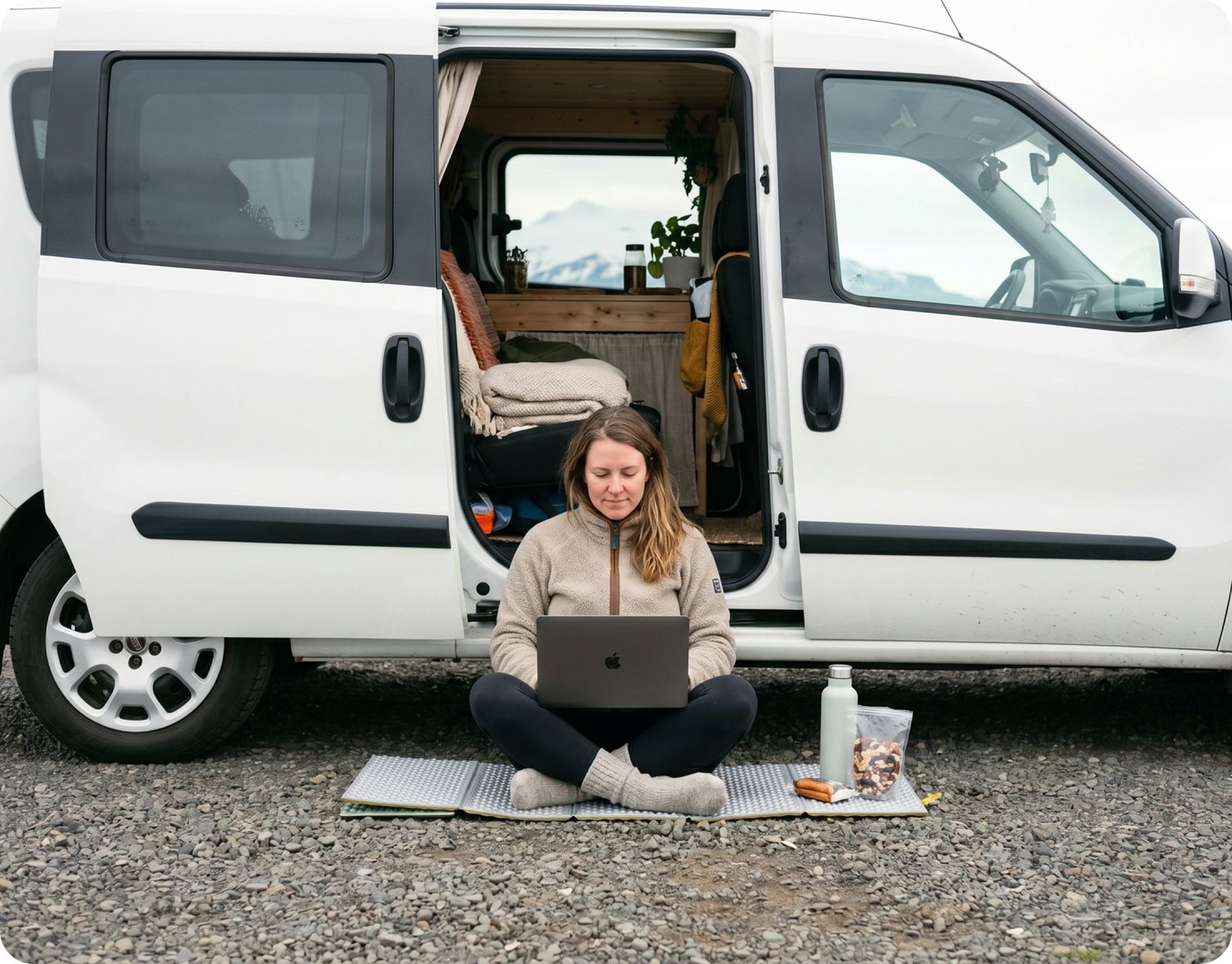
Adventure should not mean shivering through the night or eating cold sandwiches for a week. Your camper gives you the freedom of the road and the basics, so you can focus on the fun part: figuring out where to head next.


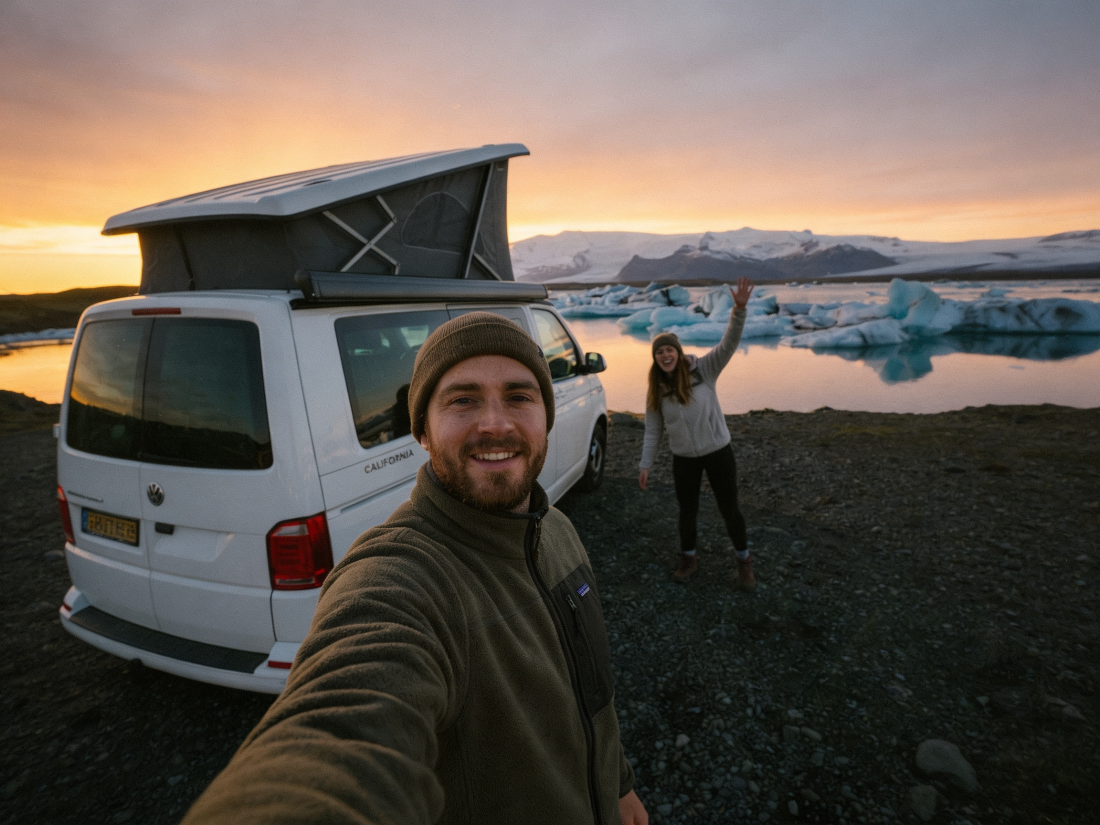

From Facebook groups to real road trips, we learn from your experiences. Here's what fellow travelers are saying about their journey with us.
 Jonas Palatino
 Traveling alone, a campervan was perfect. Small enough to feel safe driving, big enough to sleep and cook. Pickup was fast and the staff were helpful. Would rent again.
 Markus Steiner
 The campervan was clean, warm, and easy to drive. Pickup was fast, and the office was easy to find. The staff walked us through the camper. Overall, a good experience.
 Francis Gilbert
 First time in a campervan. The heater kept us warm during a rainy night in Vik, and the bed was actually comfortable. Easy to drive and easy to park. We are already planning our return trip.
 Chloe McCann
 “Loved driving around Iceland, and it's cheaper than hotels. The kitchen was basic but worked fine for pasta and coffee. Only complaint was the fridge was small, but everything else was great.”
 Tom Bixler
 The bed was comfortable, the heater worked, and the kitchen did the job. Customer services replied to all of our silly questions. Def ten out of ten.
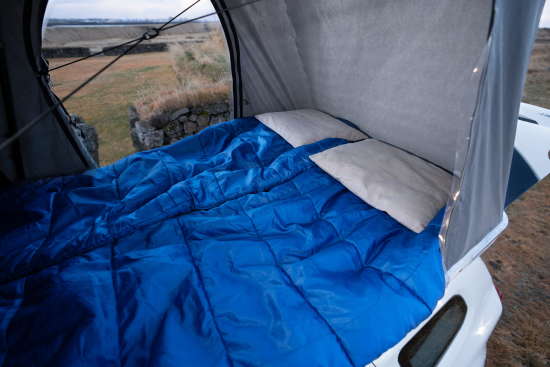
No need to pack a sleeping bag; a warm one will be ready and waiting for your first night under the stars.
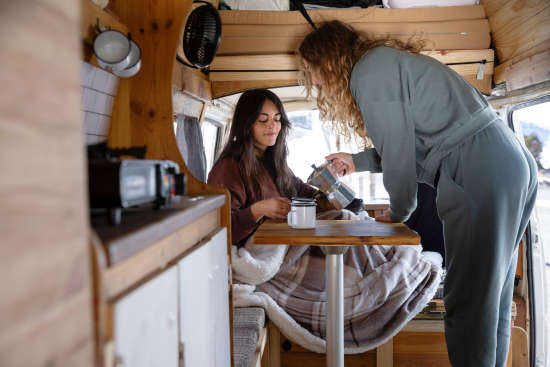
Pots clanking, plates stacking, coffee brewing. Yep, that’s your camper kitchen, fully loaded.
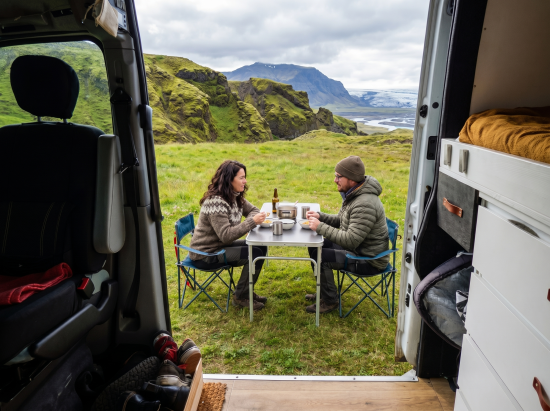
Add a table and chairs so you can pull over and turn any Icelandic view into your private dining room.
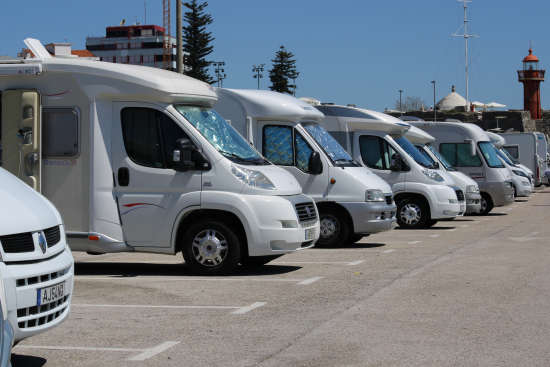
Don't let the unexpected slow you down. Add premium support to keep help one call away.
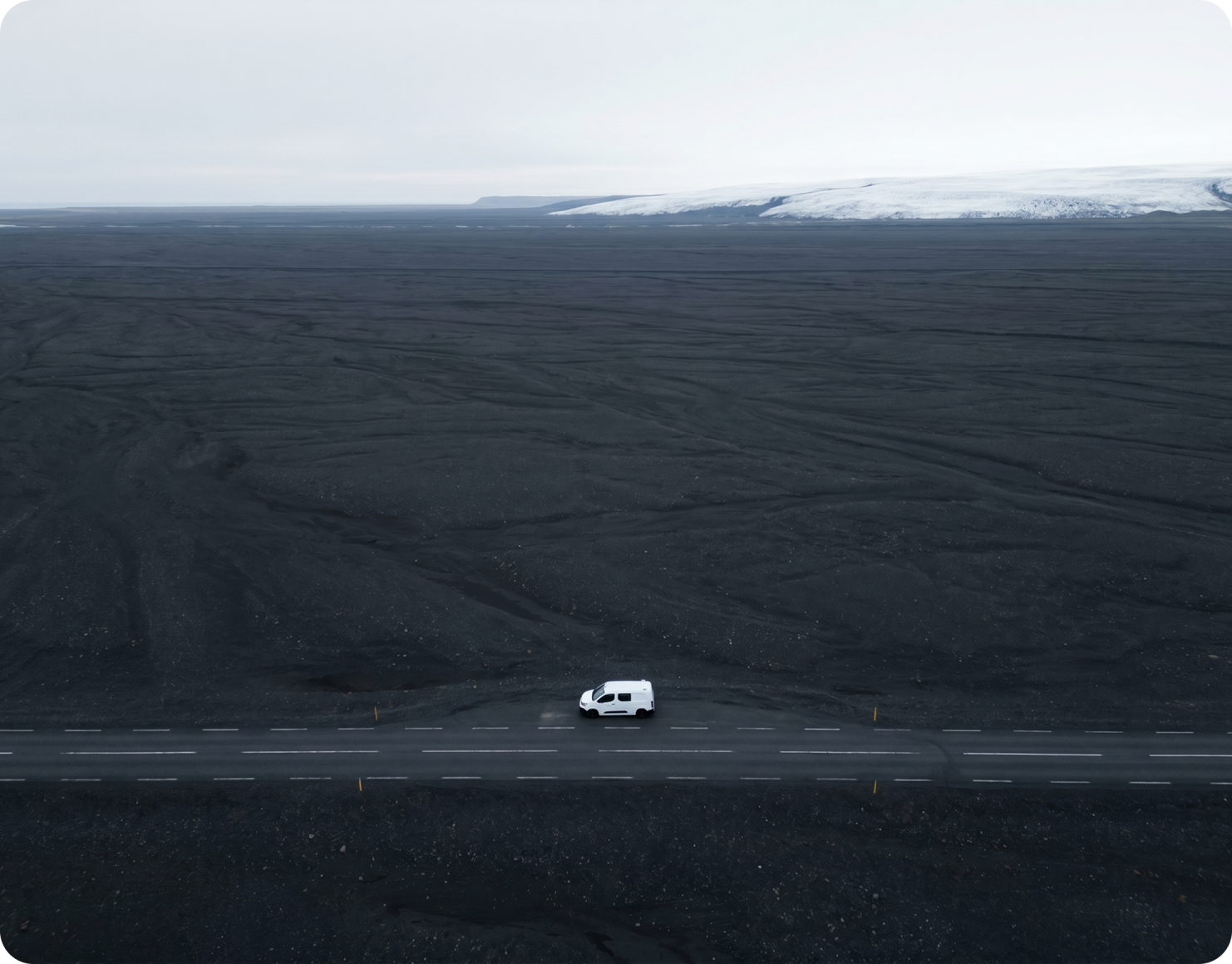
Our philosophy is that basic insurance shouldn’t be an expensive add-on, so we’ve built it directly into every booking to give you peace of mind from the moment you hit the road.

You need three things:
All of these documents must be original; no photos or copies are accepted. Likewise, if your driving license is not in English or written in the Latin alphabet (if yours is in Chinese, Russian, Japanese, .etc., with no English translation), then please bring an international driving permit along.
Já, you can share the ride, but you need to add them as an additional driver because any additional driver must be covered by the insurance too. The requirements are the same as for the main driver.
Já, yes! Every campervan rental through our platform includes real unlimited mileage. That means no daily caps, no surprise fees per kilometer, and no stressful math every time you take a detour. Drive the Ring Road twice if it pleases you!
Every Icelandic pro started at the first mile
Compact vehicle brings big freedom… a few trade-offs.
Renting a campervan in Iceland gives you freedom that hotels just cannot match. You decide when to leave, where to stop, and how long to stay. If you love a place, you linger. If it is not your favorite, you move on. No check-out times, no fixed schedules, no packing and unpacking every night.
But like anything new, there are a few things that work differently than what you might be used to. Here's all you need to know about Iceland vanlife.
Woke up to beads of water dancing on the inside of your windows? Don’t worry, it is not like your camper rental is broken or leaking; it’s condensation, and that means the night was well-spent. This is caused by the difference in temperature between the outside and the inside.
You were all cozy and warm inside your camper while the Icelandic air was crisp outside. To that, you have to add your breathing, which creates moisture that settles on the camper’s glass. It’s just physics. But just like physics creates this situation, it also has a way to solve it.
And the best way couldn’t be any simpler: before you snuggle into your sleeping bag, crack two windows on opposite sides of the van. This creates a cross-breeze that lets the moisture escape while you sleep. And don’t worry, a tiny sliver is more than enough; you don’t need to keep the windows fully open. This way, your camper will stay warm, but condensation is kept at bay.
We’re constantly talking about how nice it is to rent a camper in Iceland so you can enjoy freedom while on the road, but what about cooking and eating? Between the freedom and the food, you’ll be amazed at how much you save.
Let us start with what you can actually make: pasta is your best friend. It cooks quickly, needs only one pot, and you can add fresh vegetables, pesto, or a simple tomato sauce from a jar. Rice dishes work well too, especially one-pot meals where you throw everything in together. Soup is another winner, and it is perfect for cold Icelandic evenings. Eggs are versatile and easy, scrambled with cheese, fried on toast, or boiled ahead of time for lunch. For nights when you want something even simpler, sandwiches or wraps with cold cuts, cheese, and fresh veggies take five minutes and leave almost no cleanup.
Now, where do you buy your food? Do not try to stock up for the whole trip. Your fridge is too small, and you will waste food. Instead, shop every two or three days. The main grocery chain in Iceland is called Bónus, and you will recognize it by the pink pig logo. It is affordable and has everything you need. Krónan is another good option, slightly more expensive but with a better selection of fresh produce. Netto is also fine. Avoid the small convenience stores at gas stations unless you are desperate, because prices there are much higher.
To make the most of your limited space, a few small habits help. Wash dishes as soon as you finish eating, because dried food is much harder to clean. Store dry goods in a box or a bag that you can move around easily. A reusable shopping bag is helpful for carrying groceries from the car to your cooking spot. Pd. Some campsites in Iceland have “free food,” shelves where other travelers leave half-used oil or spices, so now you know.
Some of our best memories from campervan trips involve cooking. One night you might be parked near a lake, making pasta while the sun sets over the mountains. Another night you might be huddled inside because it is raining, but you have a warm meal and nowhere to be. Those moments feel like home, even when home is on wheels.
From our perspective, one of the best parts of campervan travel is how simple everything becomes. You do not need five pairs of shoes or a different outfit for every day. Pack light, pack warm, and pack layers. That’s all you really need in Iceland. Leave the "just in case" items at home. You will be amazed at how freeing it feels to travel with less.
That said, living in a small space does take a little getting used to; we totally understand that, so here are a few tricks to make it feel natural.
First, assign a “home” for everything. Your bag lives under the bench. Your jacket hangs on the hook near the door. Your toiletries stay in a small pouch that fits in the cupboard. When everything has a place, you never waste time searching and moving stuff around because you forgot where you left the salt for today’s meal. Probably not on the floor…you will never leave things on the floor, because, well, there is not enough floor space for clutter. It’s all upsides.
Second, think vertically. Use the walls. Hang a small shoe organizer on the back of a cabinet door to hold spices, utensils, or charging cables. Use stackable containers for food instead of bags that fall over. A few small hooks can hold towels, hats, or wet rain gear.
Third, use the space under the seats and beds. Most campervans have storage compartments there. That is where the bulky stuff goes. Camping chairs, extra shoes, and the sleeping bag you brought but never needed. Out of sight, out of the way.
Fourth, stay organized as you go. Make the bed every morning. Wash the dishes after every meal. Put things back where they belong before you drive. A messy campervan feels tiny and chaotic. A tidy one feels cozy and calm. The difference is just a few minutes of tidying each day.
Living small is not about suffering. It is about being intentional. You will be surprised how quickly you adjust, and you might even miss the simplicity when you get home and find yourself staring at a closet full of things you never needed.
The short answer is no. But the long answer is better than you think.
As we said before, the short answer is nei, nope, you cannot sleep just anywhere. Iceland has laws about this, and they apply to campervans just like tents and motorhomes. Since 2015, wild camping has been prohibited to protect both the nature and the travelers. That means no sleeping at rest stops, no pulling over at a scenic overlook, and no parking by a waterfall and hoping nobody notices.
The thing is, you can’t sleep anywhere because you simply don’t need to either. Iceland has plenty of campsites across the country. Some campsites are pretty basic. A flat field, a toilet block, maybe a sink for washing dishes. Others are quite nice, with hot showers, a kitchen, places to charge your phone, and even a small store or a golf field (ohh bougie). You will find campsites in every town, along most of the Ring Road, and even in remote areas like the Highlands and the Westfjords.
In summer, you have plenty of options. Most campsites in Iceland are open from June through August, and many open in May and September as well. In winter, fewer campsites operate, but the ones that do are usually open year-round and cater to travelers who understand that a hot shower might not be available.
The cost is reasonable, usually between fifteen and thirty dollars per person per night. That includes access to facilities like toilets, showers, and sometimes kitchens and common areas. For that small fee, you get a safe place to sleep, a flat spot to park, and the peace of mind that comes from following the rules (cause fines are hefty in Iceland).
The Icelandic Camping Card is exactly what it sounds like: a card for camping. Better said, a prepaid card that gives you access to a network of campsites across the country instead of paying per night at each one.
Here is how it works: you buy the card online before your trip or at select campsites and visitor centers in Iceland. It costs ISK 25,900, which is roughly USD 210. Once you have the card, you can stay at any participating campsite without paying a nightly fee. One card covers up to two adults and up to four children. The card is valid for a set number of nights, typically twenty-eight. That means if you are on a long trip, the card can save you a lot of money. If you are only staying a few nights, paying per campsite might be cheaper.
It does not cover campsites that are not part of the network. Some of the best campsites, especially private ones like those with a gold court we mentioned before, are not included. It also does not cover electrical hookups, which you might need in winter or if you rely on a heater that requires external power. Those are usually an extra fee. One more thing. The card is tied to a vehicle, not a person. That means you cannot share it with another campervan traveling separately. It also does not cover extra adults beyond the first two.
So, is it worth it? That depends on your trip. If you are traveling for two weeks or more and you plan to stay at campsites almost every night, the card will probably save you money. You can do the math quickly. Multiply the number of nights by the average campsite fee, which is around fifteen to twenty dollarsper person. Compare that to the cost of the card. If the card is cheaper, buy it.
Plan your route with campsites in mind. Use apps like Park4night or Tjalda.is to find campsites along your way. Read reviews to know what to expect. And if you are traveling in sum
Here is what each one means for your trip.
Every campervan rental reservation through our platform comes with Basic insurance at no extra cost, so your trip is covered from day one. That is your starting point. From there, you can decide if you want to add Plus or move up to Full Cover. Let us walk through each option so you can choose what fits your trip and your comfort level.
“Plus” adds the coverage that most travelers actually need. Gravel Protection, Sand and Ash Protection, and Theft Protection. This means you are covered if a rock cracks your windshield, if a sandstorm scratches your paint, or if someone walks away with your campervan. These are the things that actually happen in Iceland, not just theoretical risks. While the odds of someone actually stealing your camper are roughly 0.000001%, it’s always better to be safe than stranded.
Plus still has a deductible. You pay a small amount out of pocket if something goes wrong, usually a few hundred dollars. But for most travelers, Plus is the right balance between cost and peace of mind. If you plan to drive on any gravel at all, which you probably will, Plus is worth the upgrade.
Full Cover includes everything from Plus, plus one very nice feature: zero deductible. That means if something happens to the campervan, you pay nothing. The insurance covers the full cost of repairs. No out-of-pocket expenses. No stressful conversations at the return counter. Yes, it costs more per day. But for many people, the peace of mind is worth every króna.
What to download, how to charge, and where to check the weather
Let us start with the battery, because this is where a lot of first-timers get confused.
Your campervan has a leisure battery. That is separate from the one that starts the engine. The leisure battery powers the lights, the fridge, any USB ports for charging phones and tablets, and, in some campers, the heating system. It recharges while you drive, so as long as you are moving every day, it should stay healthy.
What the leisure battery does not power are hair dryers, coffee makers, and microwaves. Those draw way too much power and will drain the battery in minutes. If you need to use those kinds of appliances, you need to be plugged into a campsite electrical hookup.
How long does the battery last without driving? That depends on how much you use it. Running the lights and charging phones overnight is fine. Running the fridge constantly while parked for two days might be a problem. If you are staying in one spot for a while, drive for an hour or find a campsite with hookups to top up the battery.
A few tips to save power: turn off lights when you leave the van. Use the fridge efficiently by keeping it full, because an empty fridge works harder. Charge phones and power banks during the day while you drive, not overnight. And if your campervan has a battery monitor, check it before you go to sleep so you do not wake up to a dead battery.
Phones and tablets charge fine from the USB ports. Laptops are waay more demanding. In this case, some campervans have a 12-volt socket that can power a laptop with the right adapters. Others do not. If you need to work on the road or keep a laptop charged for entertainment, look for a 12V inverter, which converts the battery's power into the type of outlet your laptop expects.
You can bring your own portable power bank designed for laptops; they are not cheap, but they work. Alternatively, charge your laptop at campsites with electrical hookups or at cafes and libraries along your route.


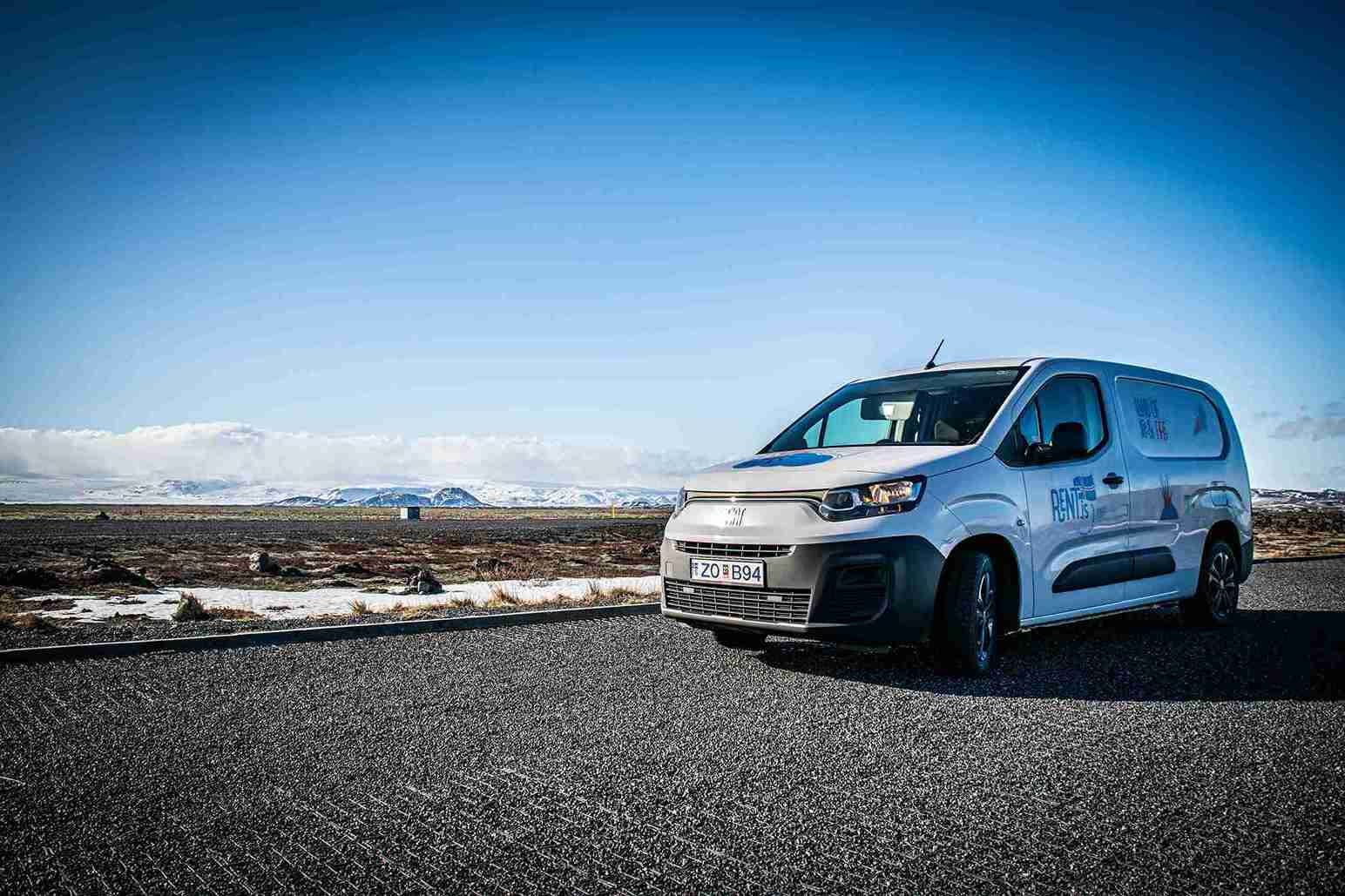
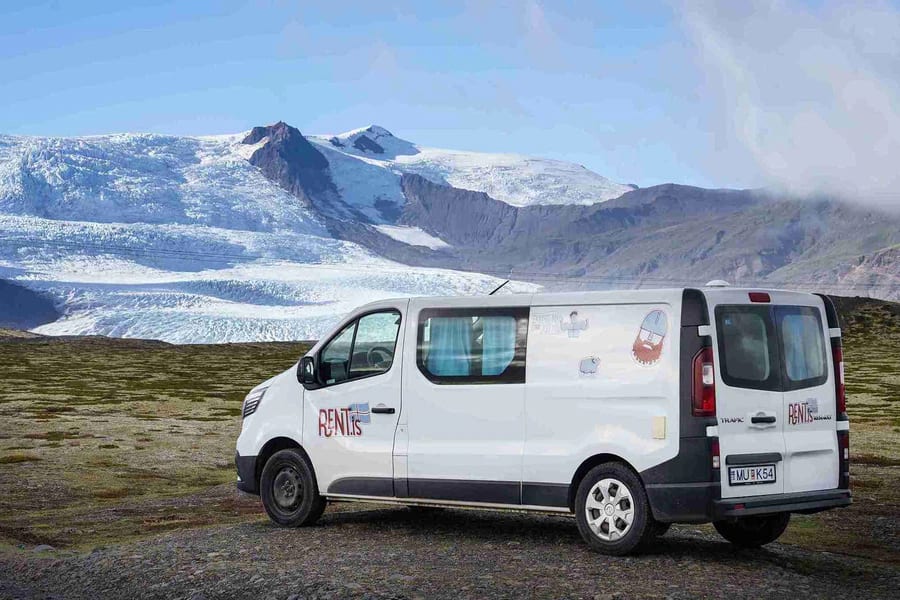

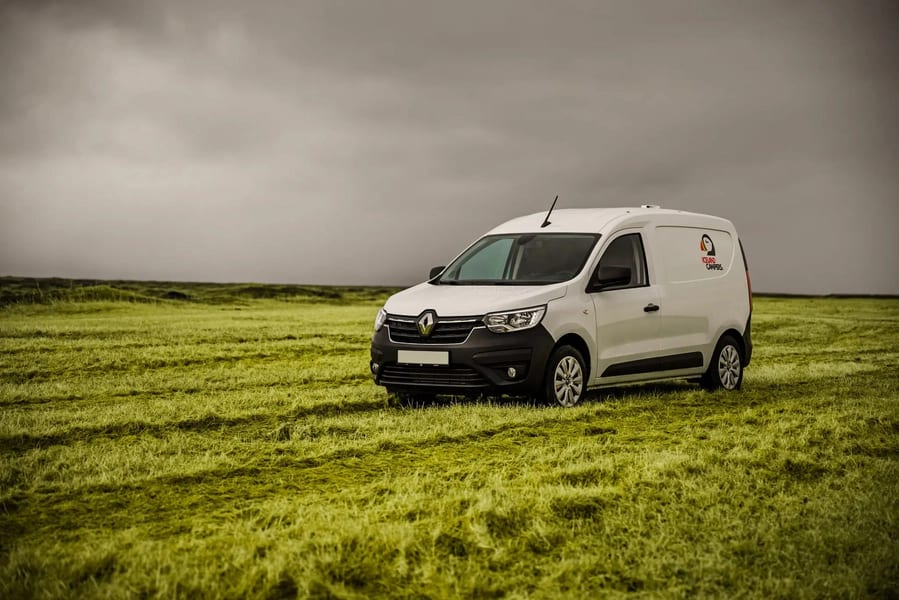
+200
Vehicles
+20
Tours
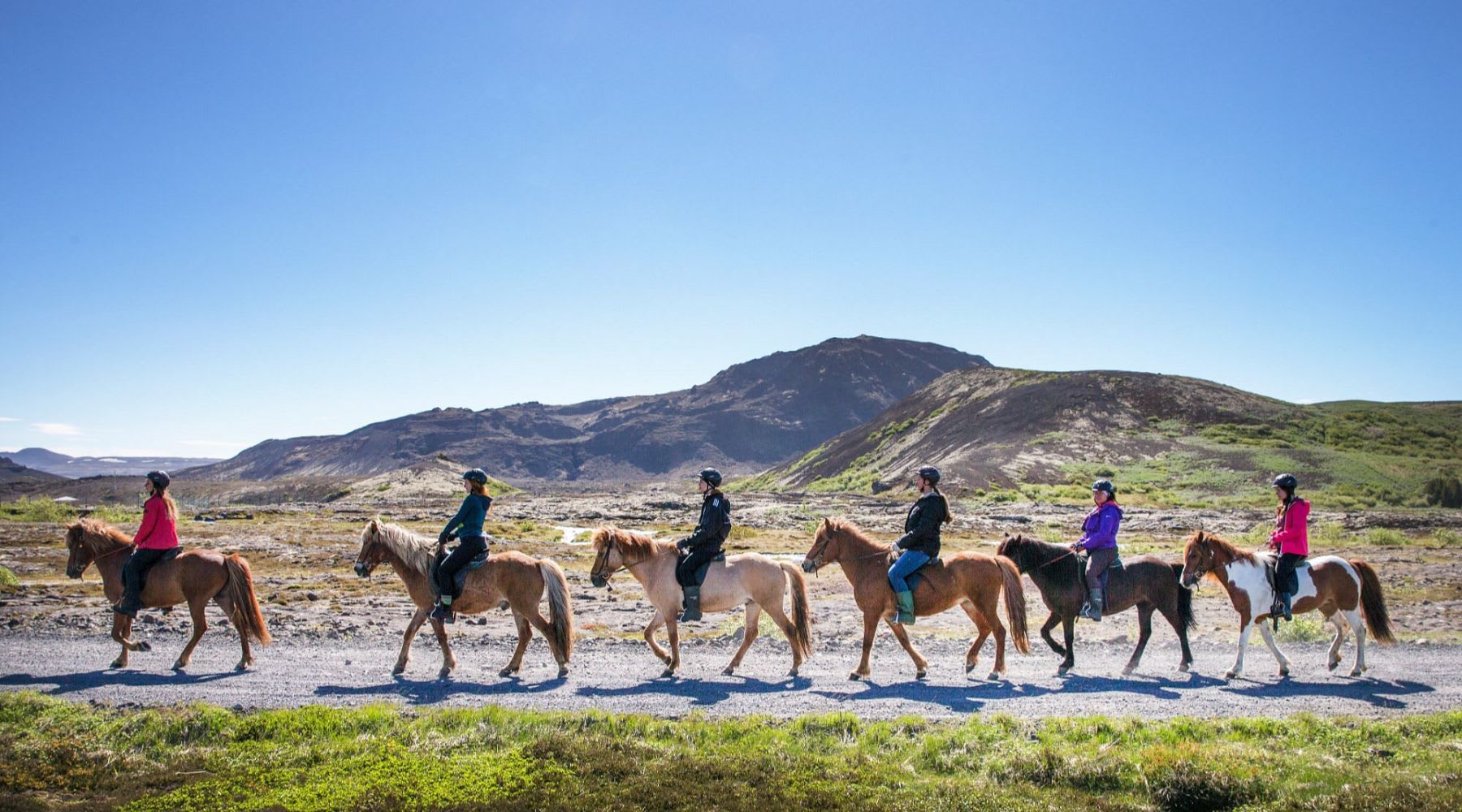
No riding experience? No problem! With our calm and patient Icelandic horses, you can enjoy both a scenic ride and some quality time petting them. Afterward, warm up the evening with delicious waffle